Overlay

Six years ago, we set ourselves a bold ambition: to at least halve the climate impact of our financing activity by 2030, against a 2019 baseline, an important milestone in our transition to net zero by 2050.  

Now, with a substantial amount of work and critical learnings behind us, we’ve made good progress towards our ambition. This includes reducing the climate impact of our financing activity by 39% from 2019.  

Crucially, there’s still some way to go. We need to stay focussed on supporting our customers by anticipating, adapting and responding to the reality of a transition that is unfolding in real time. 

Last year, we acknowledged that meeting our ambition to at least halve the climate impact of our financing activity by 2030 appeared increasingly challenging.  

Now, with the UK Climate Change Committee’s Seventh Carbon Budget report indicating faster national progress on decarbonisation and a more enabling policy environment, we’re pleased to retain our 2030 ambition, as we work towards our long-term 2050 net-zero ambition.  

Building on what we’ve learnt, this commitment calls for a renewed approach to sharpen our effectiveness; making sure we focus our resources on supporting the transition where it matters most and aligning our efforts with the evolving national policy agenda.  

We remain committed to supporting our customers through the transition, underpinned by strong corporate governance and transparent disclosures. These principles will continue to guide our decisions, shape how we help our customers navigate the path ahead and help ensure that we continue to communicate our progress with clarity.  


Our approach to net zero

Financial institutions continue to play a critical role in supporting the transition to net zero. Our approach is focused on financing decarbonisation and managing our own emissions. 

Our greatest strength is being a trusted partner to our customers. This includes helping those working towards net zero make confident decisions as they navigate risks and opportunities in their transition journeys.  

Last year, we exceeded our £100 billion target for climate and sustainable funding and financing early and we’ve since set a new target. Our £200 billion climate and transition finance target expands our customer support to accelerate progress, whether that be backing large-scale renewable projects, supporting sustainable transport options, or helping homeowners make their homes more energy efficient. 

In 2025, we continued reducing operational emissions and improving energy efficiency across our own offices and buildings through targeted investments and innovative solutions. This has helped us to make progress towards our 2030 operational emissions ambitions. 


Sharpening our focus

Shaped by our learnings to date, including understanding where we can deliver the right impact, we’ve refined the way we set and measure progress.  

This is why we’re moving from 16 sector targets to 9 activity-based targets, all focused on the areas where we can make the biggest difference such as energy, property and food. It's a more material, simpler and targeted approach. 


Our approach to energy supply 

Our energy system review reflects the complexity of the economic transition and the broader direction of the national policy agenda.  

We continue to prioritise renewables and low-carbon solutions. While our exposure to oil and gas represents less than 1% of the bank’s balance sheet, we also recognise the important yet declining role oil and gas will play as the UK transition progresses – and with the support of a strong governance and oversight framework, we will continue to engage with and support this sector, rather than disengage prematurely. 

In light of the evolving landscape and reflecting the outcome of our energy system review, we have published a new Environmental & Social Energy Supply Sectors Risk Acceptance Criteria. The revised criteria clarify our prohibitions and restrictions on fossil fuel related activities, while allowing flexibility in how we support the transition of energy supply sectors.


Looking ahead

Overall, we’ve made important progress in supporting customers and communities in the transition to a net-zero economy.  

We’re positive about the growth opportunities created by the UK’s continued commitment to net zero and the updates we’ve made to our approach help to strengthen our ability to finance decarbonisation.  

We will continue to learn, adapt and respond to the external landscape as it evolves, while remaining dedicated to achieving the ambitions we’ve set ourselves. 


Readers are cautioned that the achievement of our climate and sustainability‑related ambitions and targets is dependent on a range of internal and external factors and that our sustainability-related funding, financing and facilitation currently represent only a relatively small proportion of our overall funding, financing and facilitation activities. Read our full climate and sustainability‑related disclosures in our 2025 annual reporting suite, available on our website.

2025 Climate Transition Plan Report

Energy Supply Sectors E&S RAC

Download Energy Supply Sectors E&S RAC

Firth Farming’s organic dairy innovations

Dumfriesshire-based Firth Farming was named Sustainable Farm of the Year at the 2025 Scottish Agriculture Awards. The Jamieson family has farmed 270 hectares across three units since the 1950s, placing sustainability at the heart of the business. Converting to organic in 1999 boosted product value, cut input costs, improved yields and enhanced biodiversity.

With the help of financing from NatWest Group, the farm invested in an energy-efficient 40-point rotary parlour, enabling three-times-a-day milking. Rotational grazing, improved winter housing and a genomics-led breeding programme have further strengthened herd health and environmental performance.
Scaling solar to meet future needs

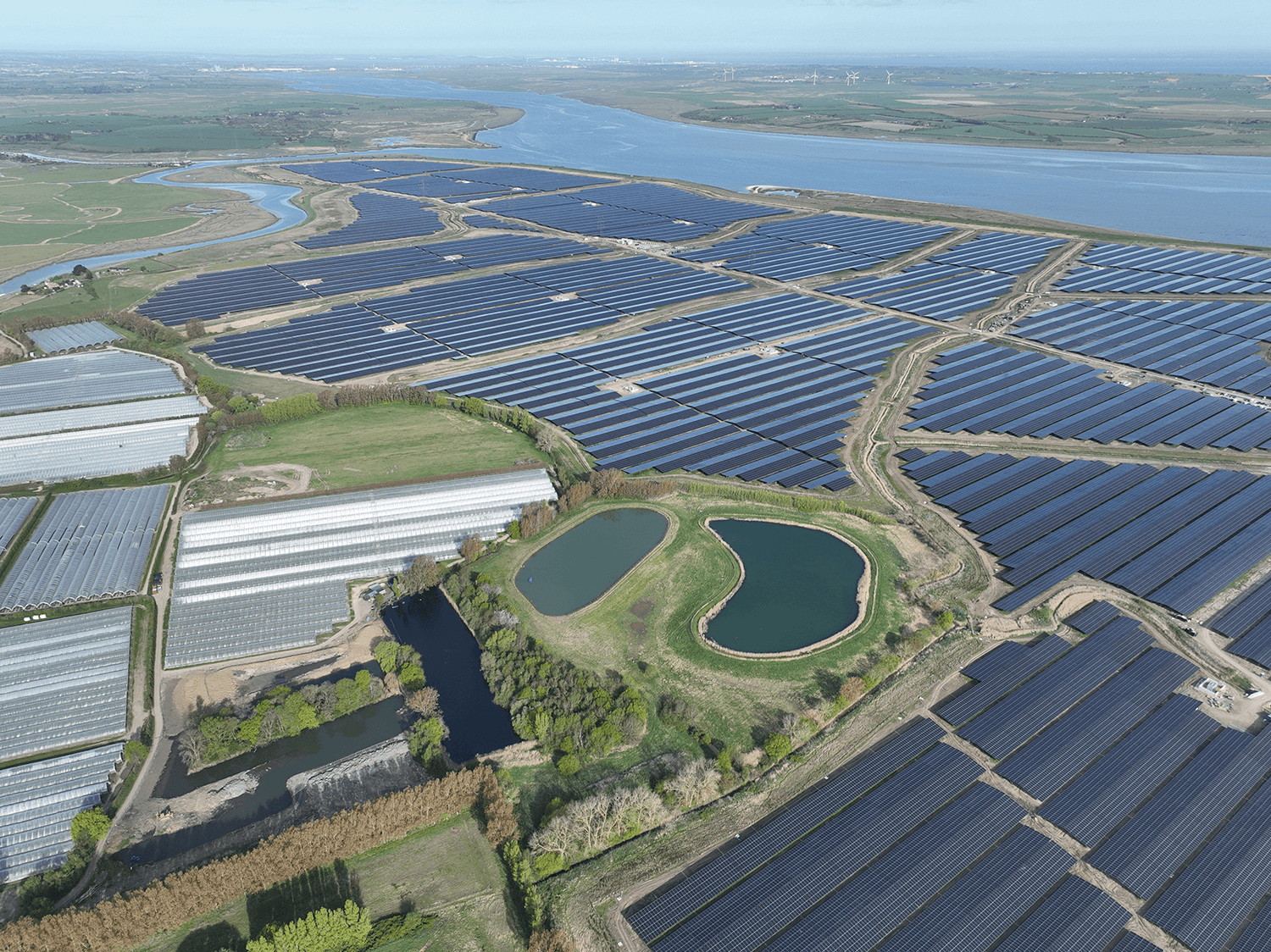
We’ve supported Quinbrook Infrastructure Partners to help finance Cleve Hill Solar Park, the UK’s largest under construction solar and battery storage project.  

Located on the north Kent coast, Cleve Hill is the largest operational solar park in the UK, delivering 373MW of solar capacity to the grid. Construction started in early 2023 and the solar park became fully operational in summer 2025. Work continues on a co-located 300MWh Battery Energy Storage System, which is expected to be connected in 2026.

A boost for sustainable social housing

We’ve announced £500 million of additional support for the retrofit of UK social housing stock in 2025. The funding boost was made possible thanks to our collaboration with the National Wealth Fund, which has provided a financial guarantee of up to £400 million. 

This lending aims to cut energy consumption and accelerate the decarbonisation of social housing through funding energy-efficient heating and lighting, insulation, renewable energy generation, as well as helping to make properties more resilient to extreme weather events.

scroll to top