The Equator Principles (EP) constitute a voluntary risk management framework adopted by financial institutions for the purpose of identifying, assessing and managing environmental and social risks in connection with project-related financing. NatWest Group has been a signatory to the EP since 2003.
All transactions falling within the scope of the EP are subject to an initial environmental and social risk screening, typically carried out by using a structured questionnaire. In the context of project finance transactions, an independent, suitably qualified technical advisor is appointed to assess the potential environmental and social impacts of the relevant project and its compliance with the requirements of the EP.
In addition, these transactions are subject to enhanced due diligence conducted by the Environmental and Social (E&S) Advisory team. This due diligence includes an assessment of the transaction’s compliance with the EP. The outcome of this assessment is formally documented and forms part of the relevant credit application submitted for internal approval.
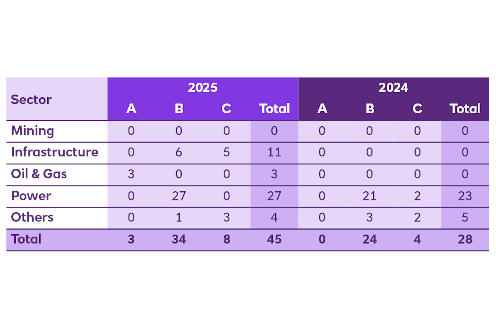
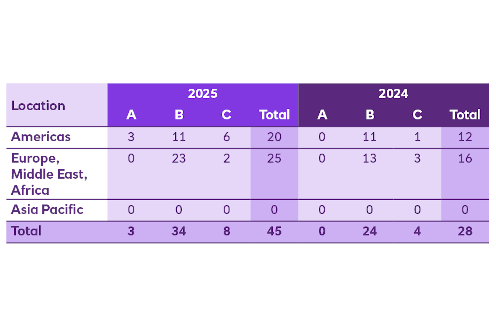
Under the EP, projects are categorised according to the scale and significance of their environmental and social impacts, using a classification system ranging from Category A to Category C. Category A projects are those with potentially significant adverse environmental and/or social impacts, while Category C projects are expected to have minimal or no such impacts.
Depending on the assigned category and other risk considerations, the proposed transaction may be subject to additional internal review and governance, including escalation to the appropriate Risk Committee where required.
The requirements of the EP are embedded within the bank’s E&S Risk Framework and form an integral component of its overall risk management framework.